Epoxy Injection Pump
Home » Epoxy Injection Pump
Professional Injection Pump Manufacturer In China
An injection pump is a specialized grout pump designed to inject grout materials such as epoxy resin, PU, Acrylic, cement-based, etc., into cracks, joints, and voids within concrete structures.
It is commonly used in the construction and structural maintenance industry for waterproofing applications, including concrete crack repair, bridge maintenance, basement waterproofing, tunnel sealing, parking structure restoration, industrial flooring repair, and foundation strengthening. These pumps are often used together with injection packers to deliver grouting materials precisely into damaged areas of concrete.
Our factory offers OEM and private label manufacturing with low MOQ, allowing distributors, construction suppliers, and equipment brands to develop their own epoxy injection grout pump product lines.
Rubor has a wide range of injection pump, such as one component polyurethane (PU) grout injection pump, two component epoxy crack injection pump, acrylate chemical grout injection pump, cement-based concrete injection pump, etc.
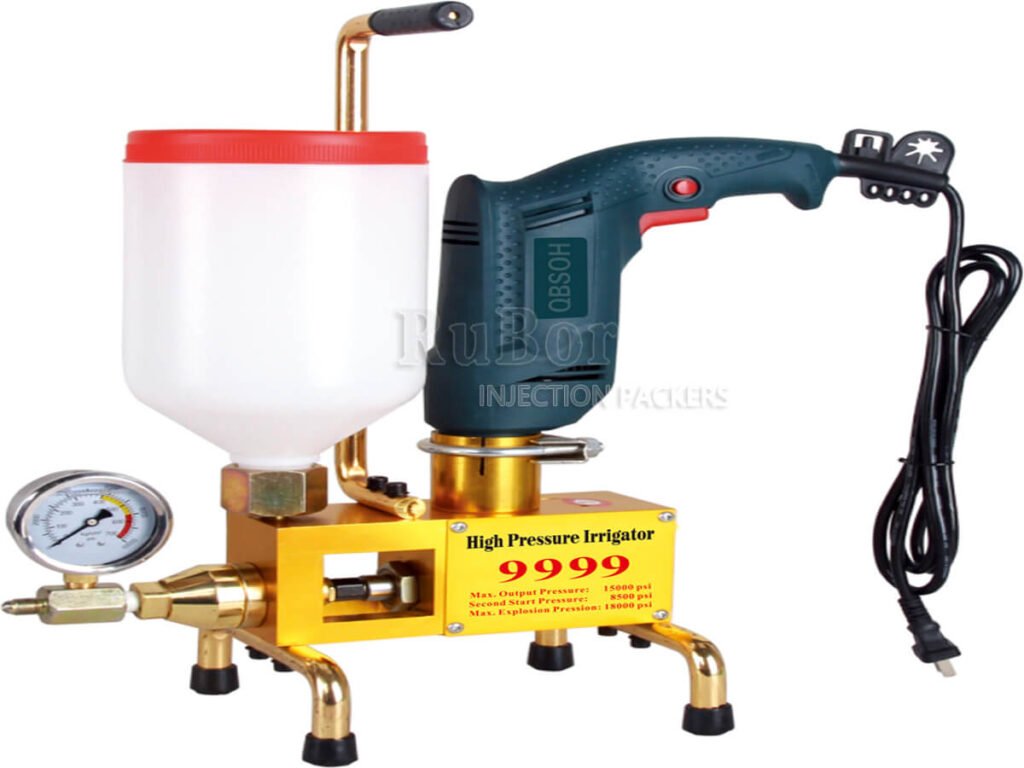
One Component Injection Grout Pump
One component injection grout pump mainly used in injecting PU at high pressure, the highest pressure can reach out 10,000 Psi, we can adjust plug as per your countries requirements.
ADVANTAGES:
*Small volume and portable
* Easy to handle and work in confined spaces such as basements, tunnels, or underground facilities.
* High pressure up to 10,000PSI.
The pumps are standard equipped with injection hose, injection valve and grase coupler. No need to pay extra cost.
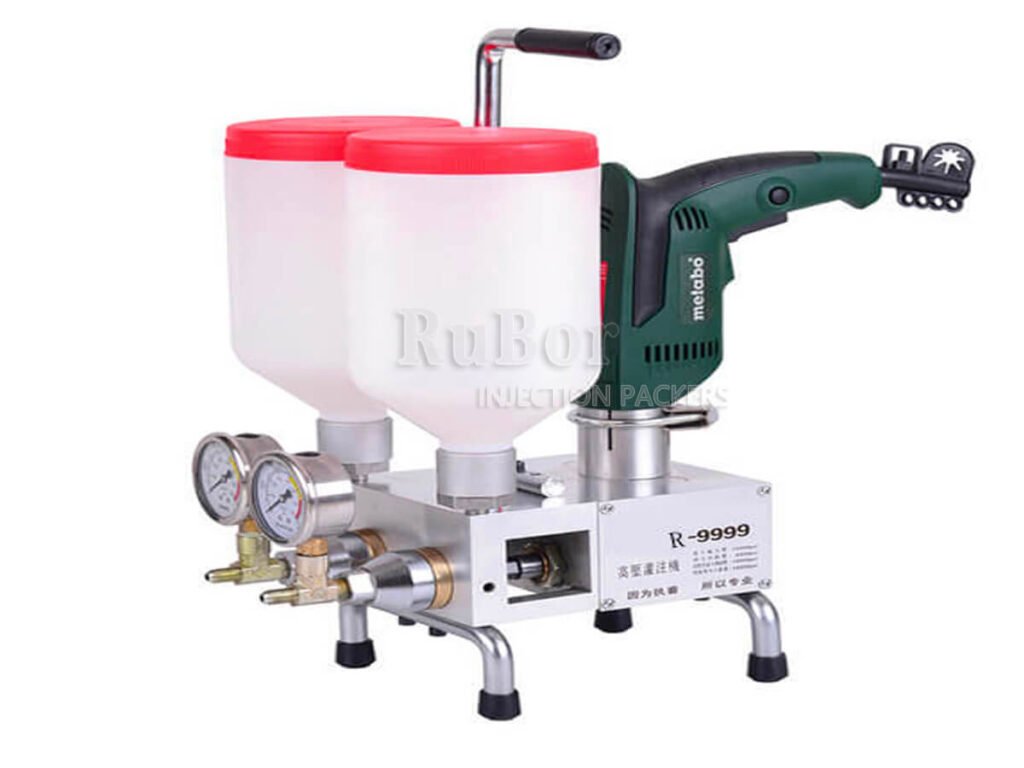
Two Component Epoxy Injection Pump
Two component injection grout pump is generally used for epoxy crack injection.
This type of grout pump is commonly used for two-component polyurethane resins, epoxy resin. It is widely applied in demanding construction and civil engineering projects such as tunnel waterproofing, underground structure sealing, dam and bridge repair, soil stabilization, and large concrete crack injection.
Advantages:
* Adjust mixing ratio, you can adjust speed of the pump to control the ratio of the material.
*High-pressure and continuous operation.
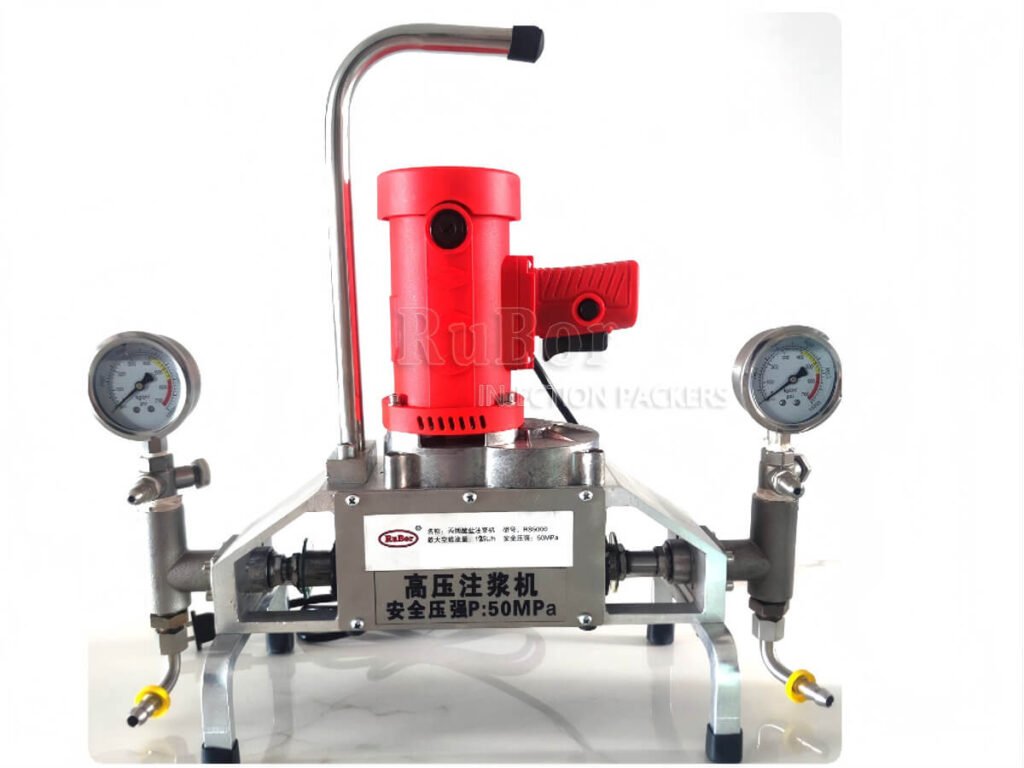
Acrylate Grouting Pump
An acrylate grouting pumps is designed for injecting two component acrylate gel, it is equipped with injection hose, suction hose, injection valve and grease coupler. We have different types of acrylate injection pump to chose. Power from 2600W, 2800W, 3800W. Flow rate: 120kg/h, 200kg/h, 240kg/h.
We provide different package such as carton and wooden box.
Advantages:
*High Flow Rate & Powerful Performance: Completes grouting efficiently, even in large-scale projects.
*Piston without ball and spring: Provides excellent wear resistance and extended service life.
*Extended Cable Switch: Enables convenient remote operation for safety and flexibility on site.
The acrylate injection pump provides a reliable, durable, and efficient solution for precise chemical grouting applications.
cementitious grout Injection Pump
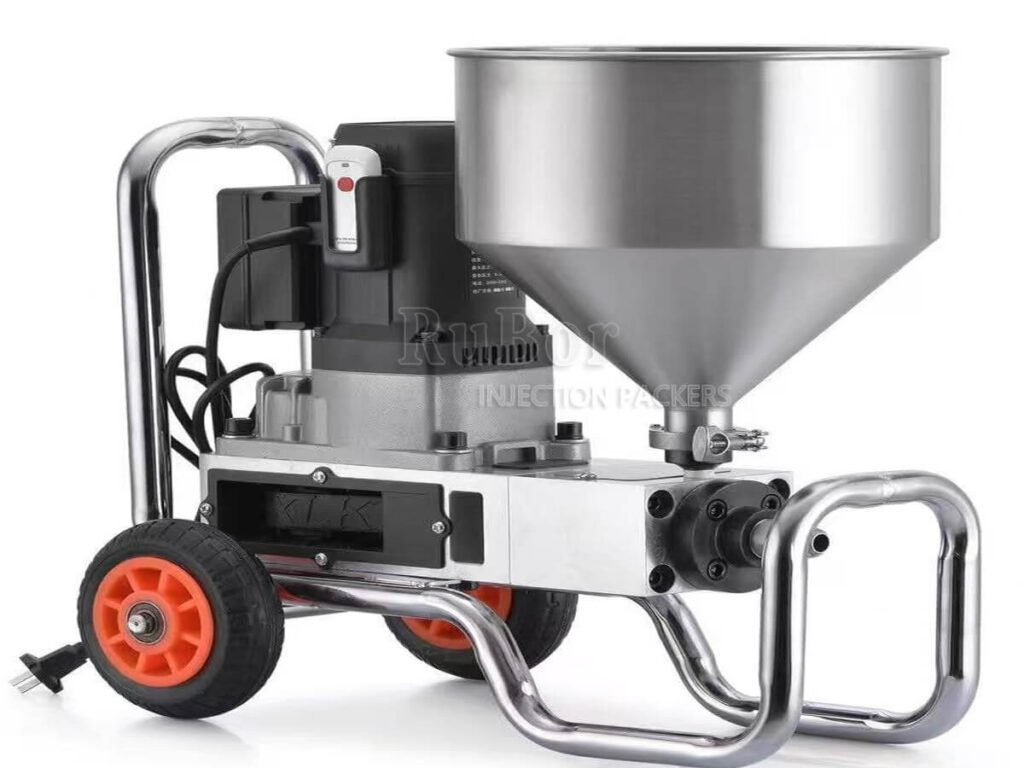
Cement-based injection pump is another type of grout pump, which mainly injects cement slurry. It is used for concrete structure reinforcement, crack repair, and foundation strengthening. It integrates with the original structure to restore and enhance load-bearing capacity.
Wide Range of Applications:
Structural crack reinforcement (beams, slabs, columns)
Foundation strengthening & settlement correction
Slope & tunnel bolt anchoring
Road, bridge & culvert repair
Dam crack treatment & hydraulic engineering
Advantage:
*Lightweight & portable, easy for one-person operation
*High-pressure injection, penetrates fine cracks effectively.
*High efficiency, multi-purpose use for various grouting projects.
Injection Pump Accessories
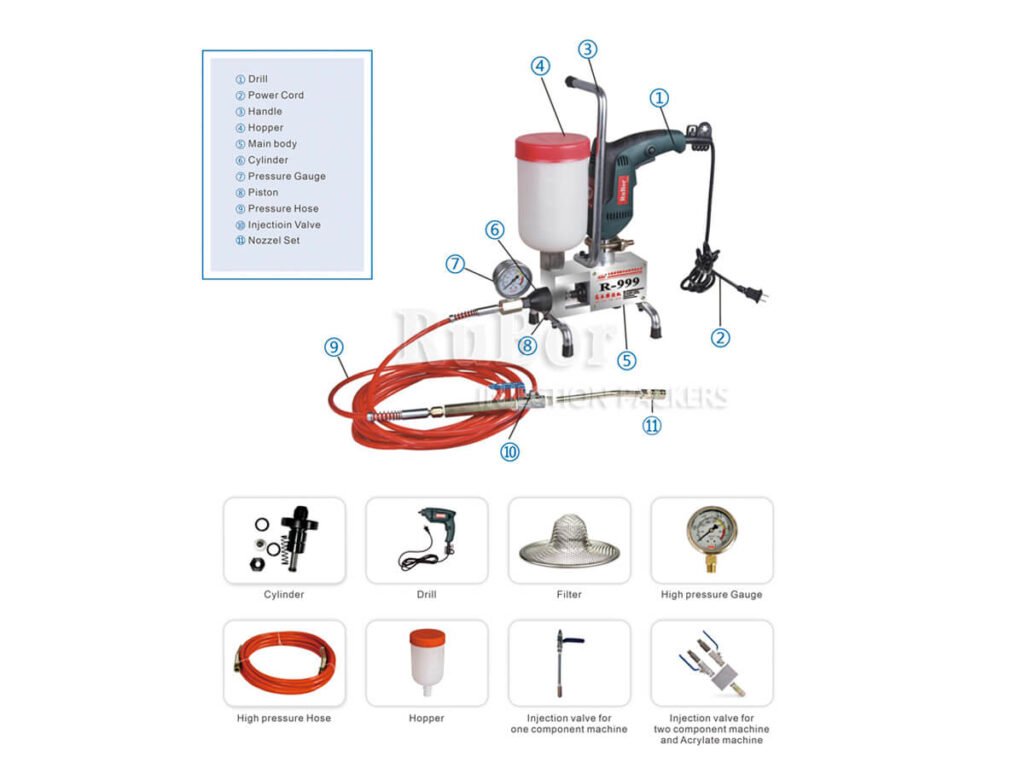
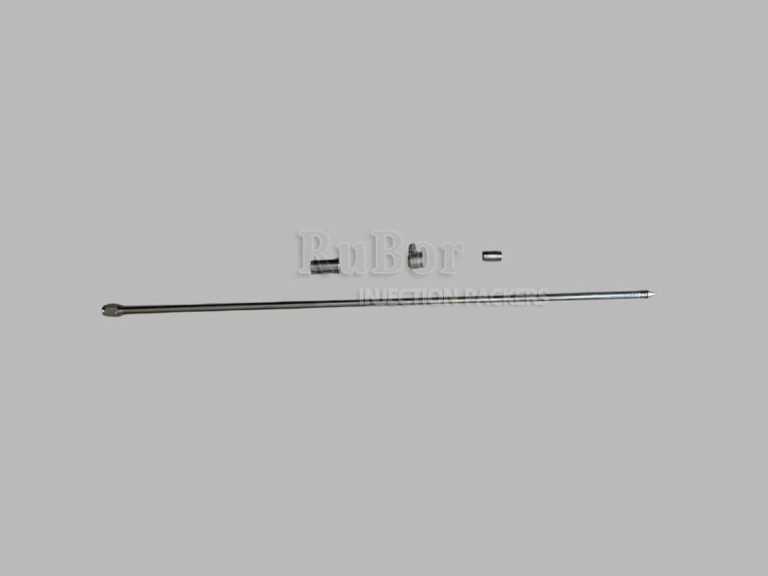
As we know, the injection pump works under pressure and continuous use, so some parts will naturally wear, we have to replace them regularly to ensure the pump work smoothly.
Common wear accesorries include:
O-rings – prevent leakage and maintain pressure
Pump piston – subject to friction during operation
Check valves / ball valves – control grout flow direction
Valve seats – work together with valves and may gradually wear
Injection hoses and coupler – exposed to pressure and material abrasion
Recommended replacement intervals:
Seals and O-rings: every 3–6 months depending on usage
Valves and valve seats: about 6–12 months
Piston : replace when noticeable wear appears
Hoses: inspect regularly and replace if cracks or leakage occur
Keeping spare parts available can reduce downtime and ensure the injection pump continues to perform efficiently on site.
Related Products
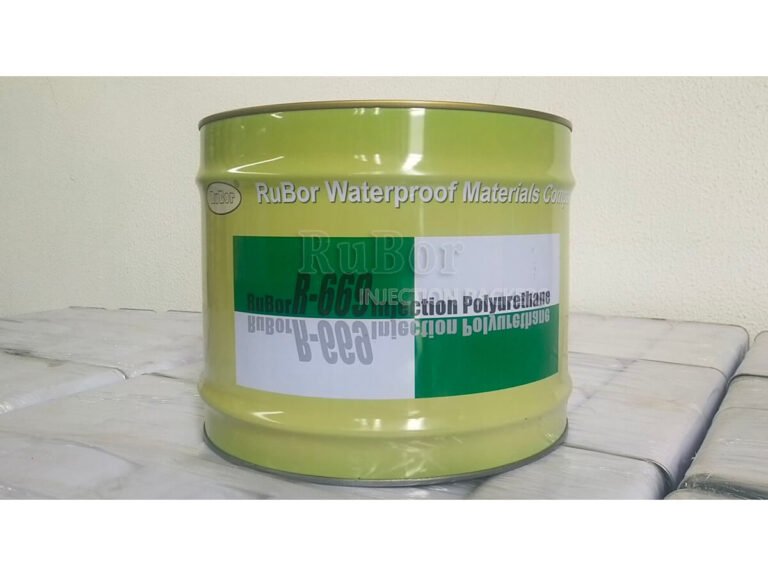
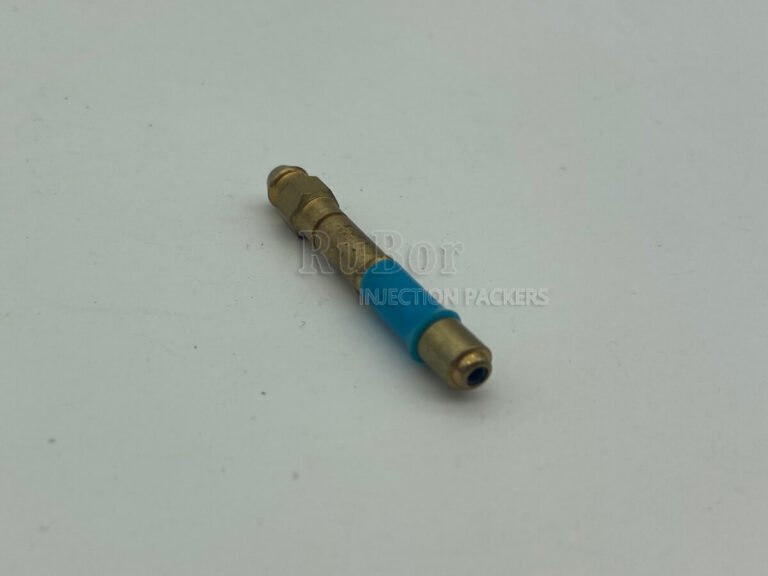
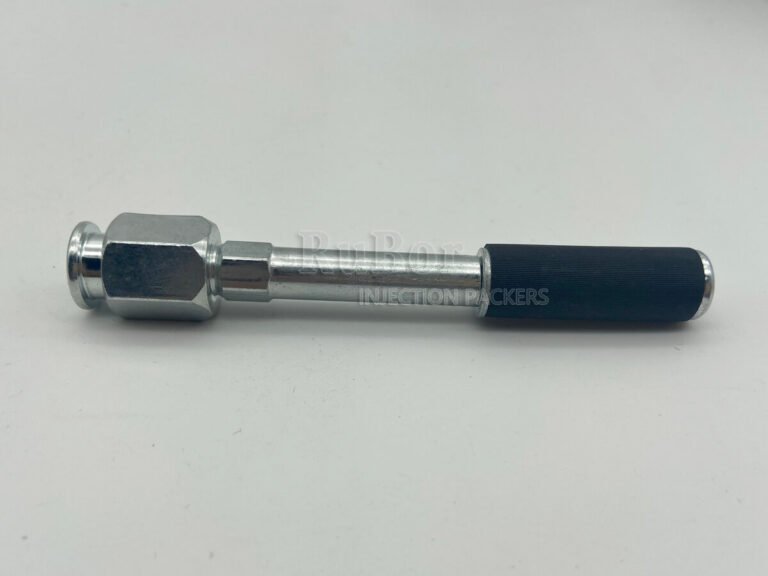
13mm Button Head Packers
Submit a Quick Quote
FAQS
we are happy to hear from you and will reply to you with our product solutions.
Q1. What pressure range is required for effective epoxy injection?
Most epoxy injection pumps operate between 300–500 bar (≈4000–7000 psi), which is sufficient to drive resin deep into cracks and ensure full penetration.
Q2. What is the difference between single-component and two-component epoxy pumps?
- Single-component pumps: used for pre-mixed resins, simpler operation
- Two-component pumps: mix resin and hardener during injection, ideal for fast-curing epoxy systems and precise ratio control
Q3.How does resin viscosity affect pump selection?
Epoxy pumps must handle a wide viscosity range (from low to high cps). Higher viscosity requires stronger pressure output and stable flow control, otherwise injection may be incomplete or inefficient.
Q4. What are common problems when using epoxy injection pumps?
Typical issues include:
- Pressure fluctuations
- Premature curing inside hoses
- Blockage due to improper cleaning
- Incorrect mixing ratio (for 2-component systems)
Proper operation and maintenance prevent these failures.
Q5.Can epoxy injection pumps be used with other materials?
Yes, many pumps are designed to handle PU resins, acrylates, and other chemical grouts, making them versatile for multiple applications.
Related blog about injection pumps
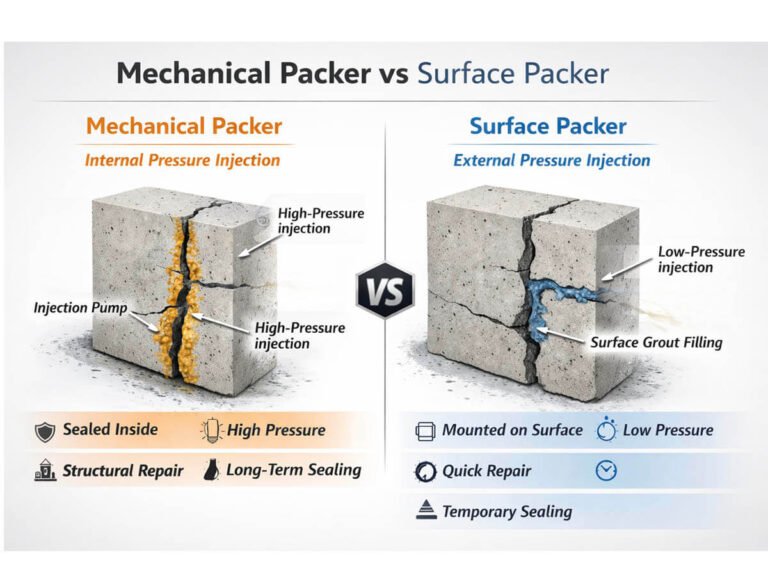
Mechanical vs Surface Injection Packers
Introduction Mechanical and surface injection packers differ in installation method, injection depth, and pressure delivery. Mechanical packers are installed into drilled holes, creating an internal
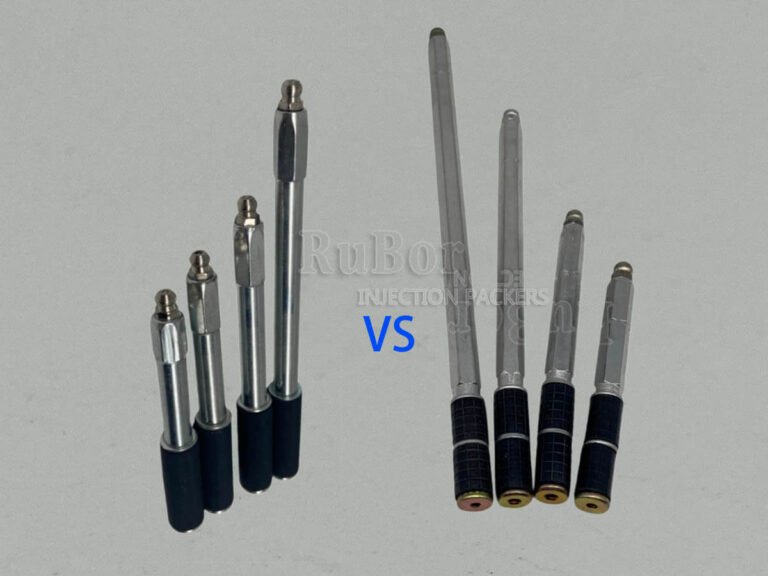
Steel vs Aluminum Injection Packers: Which One Is Better for Your Project?
Introduction Steel injection packers are best for high-pressure, structural, and reusable applications, while aluminum packers are ideal for medium-pressure waterproofing jobs where cost and corrosion
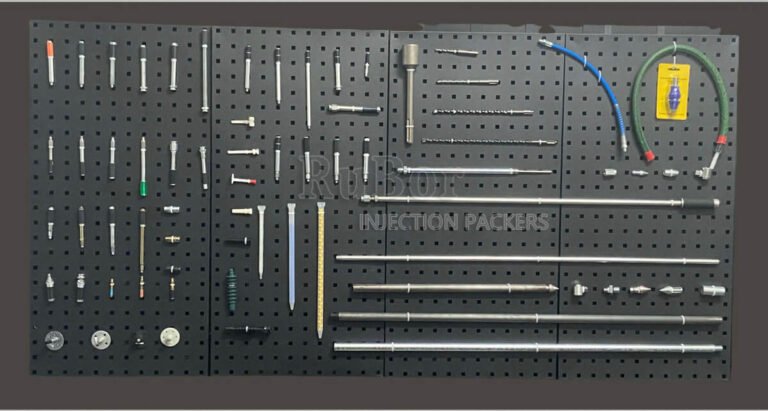
How to Choose Injection Packers
Introduction Injection packers should be selected based on crack width, injection pressure, material type (PU or epoxy), and application environment. Use Aluminum packers and steel