
Crack Injection
Home » Application » Crack Injection
Crack Injection for Concrete Repair and Structural Reinforcement.
Restore Structural Integrity from the inside.
What is Crack Injection
It is a precision repair solution used to restore the structural continuity of cracked concrete by injecting specialized materials into the full depth of the crack.
Unlike waterproofing-focused methods, it is designed to bond, fill, and stabilize internal defects, thereby improving load transfer and the structure’s long-term durability. It is a structural repair system, not a surface sealing or external barrier method.
Crack Injection is a controlled process that introduces resins, gels, or mineral grouts into cracks using pressure or gravity to achieve internal bonding and structural restoration.
This technique ensures:
- Full-depth crack penetration
- Re-establishment of concrete continuity
- Improved durability and resistance to further deterioration
It is widely used in structural repair, rehabilitation, and maintenance of concrete systems
When is Crack Injection Required?
It is applied when cracks affect a structure’s performance, durability, or load-bearing capacity.
Typical Conditions
- Structural cracks in beams, slabs, and columns
- Shrinkage, thermal, or load-induced cracks
- Cracks allowing moisture ingress that may affect reinforcement
- Concrete separation impacting structural behavior
Not Recommended
- Severely corroded reinforcement without prior repair
- Unstable or actively moving cracks(unless flexible systems are used)
Proper crack assessment is essential before selecting injection as a repair method
Crack Injection Materials and Selection
Material selection depends on crack condition, movement, and repair objective.
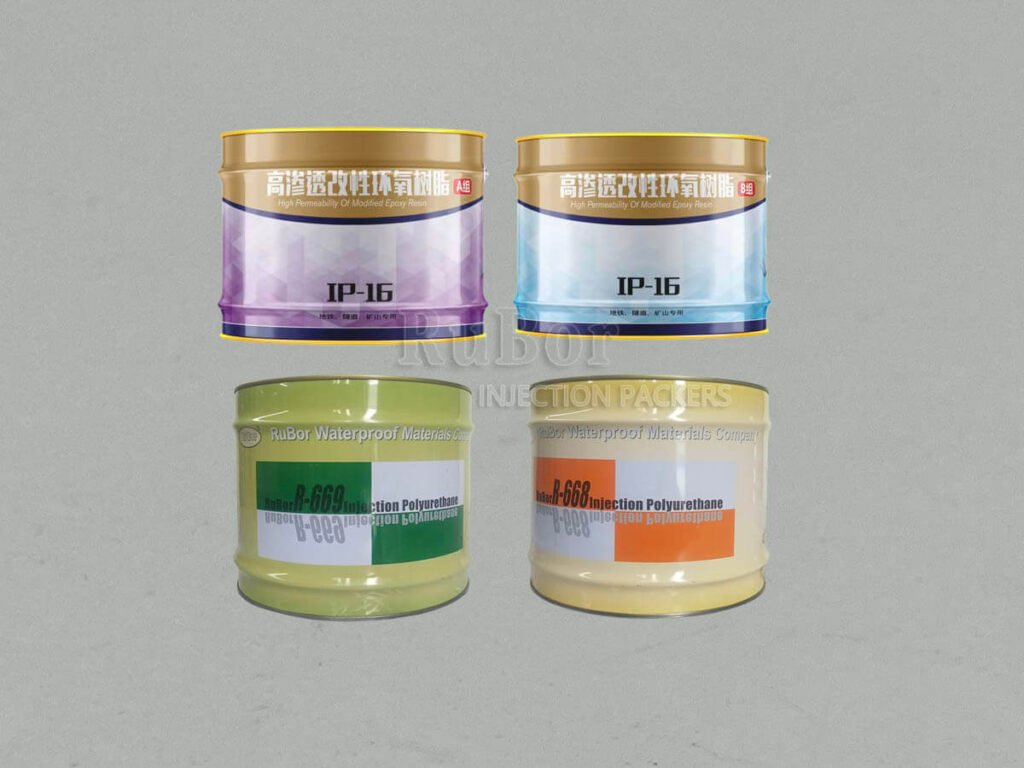
Epoxy Injection
- High strength and rigidity
- Restores structural bonding
- Suitable for dry, dormant cracks
✔ Used when structural performance is critical
Polyurethane (PU) Injection
- Flexible and reactive
- Expands to fill voids
- Tolerates slight movement
✔ Used when cracks are active or moisture is present
Hybrid or Multi-Stage Injection
- Combines structural bonding and flexibility
Applied in complex crack conditions
Crack Injection Process
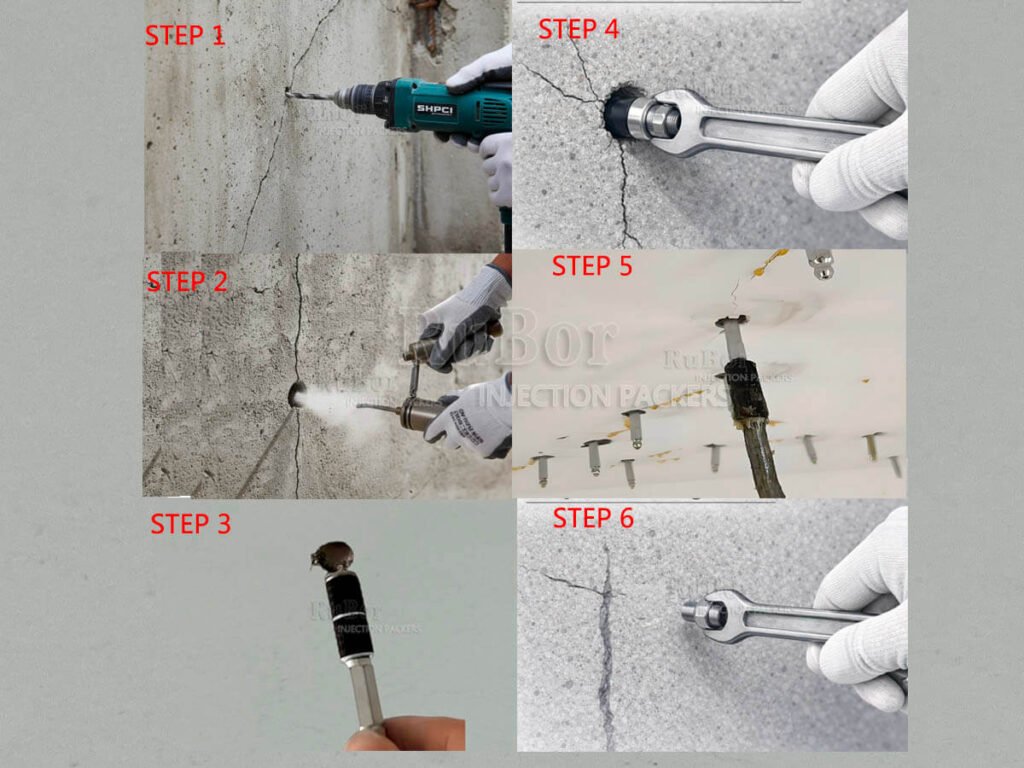
It is performed through a controlled sequence to ensure full penetration and effectiveness.
Standard Procedure
- Surface preparation and crack assessment
- Installation of injection packers along the crack line
- Sealing of the crack surface (if required)
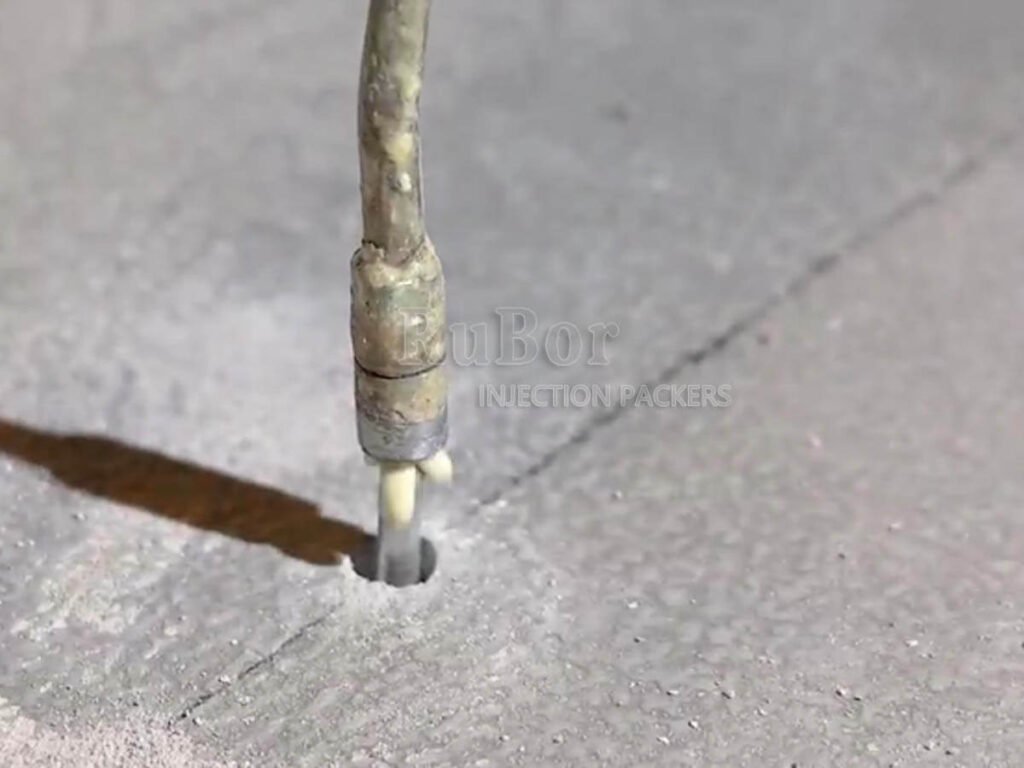
- Injection of resin under controlled pressure
- Monitoring material flow and penetration
- Removal of packers and finishing
Proper pressure control ensures complete filling without damaging the structure
Crack Injection Design Considerations
Successful crack injection depends on understanding crack behavior and material response.
Crack Width and Depth
Determines material viscosity and injection approach
Crack Activity
Active vs dormant cracks require different materials
Injection Pressure
Must be controlled to avoid crack expansion or leakage
Material Compatibility
Ensures long-term performance and bonding
Crack Injection Applications
Crack injection is widely used in structural repair across multiple sectors:
- Concrete buildings and foundations
- Bridges and infrastructure
- Industrial floors and slabs
- Parking structures
Water-retaining structures (structural repair only)
Advantages of Crack Injection
- Restores structural integrity
- Targets internal defects directly
- Extends service life of structures
- Minimizes need for demolition or replacement
- Provides precise and controlled repair
Crack Injection vs Other Techniques
Method | Purpose | Scope |
Crack Injection | Structural crack repair | Localized |
Leak Sealing | Water stopping | Localized |
Curtain Injection | External barrier formation | Area-wide |
Soil Stabilization | Ground improvement | Subsurface |
Submit a Quick Quote
FAQS
we are happy to help you choose the best leak sealing procuts for your projects.
Q.Can crack injection permanently repair cracks?
Yes,when cracks are stable and proper materials and procedures are used,long-term structural performance can be achieved.
Q. Is crack injection structural?
Yes, especially when epoxy systems are used to restore load-bearing capacity
Q.How does crack width affect material selection?
Fine cracks require low-viscosity materials,while wider cracks require higher-strength or volume-stable materials
Q. What is the best material for crack injection?
Epoxy for structural bonding, PU for flexible or moisture-affected cracks.
Get a Professional Crack Injection Solution
If your structure shows signs of cracking, early intervention can prevent further damage and restore performance. Please feel free to contact us for professional solutions.
Provide us with:
- Crack type and size
- Structure condition
- Environmental exposure
We will recommend:
- Suitable injection materials
- Repair method
- Equipment configuration
👉 Contact us for a tailored crack repair solution
Related blog about crack injection
Lorem Ipsum is simply dummy text of the printing and typesetting industry.
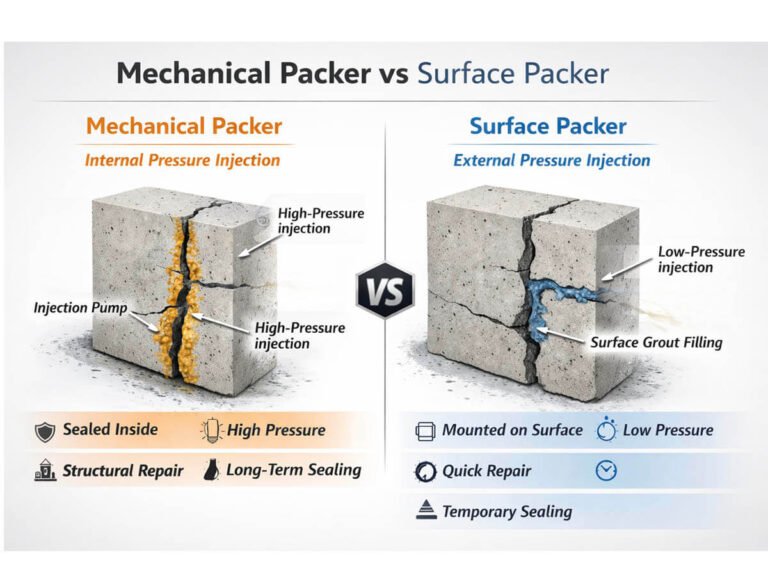
Mechanical vs Surface Injection Packers
Introduction Mechanical and surface injection packers differ in installation method, injection depth, and pressure delivery. Mechanical packers are installed into drilled holes, creating an internal
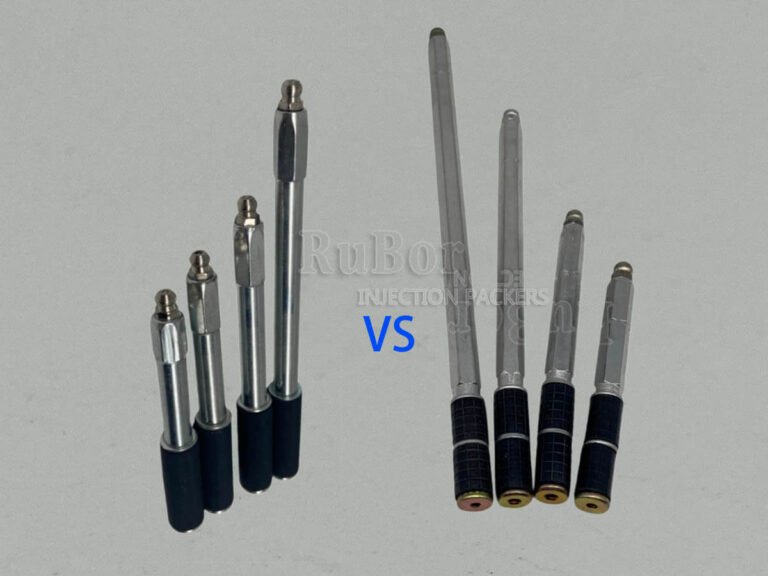
Steel vs Aluminum Injection Packers: Which One Is Better for Your Project?
Introduction Steel injection packers are best for high-pressure, structural, and reusable applications, while aluminum packers are ideal for medium-pressure waterproofing jobs where cost and corrosion
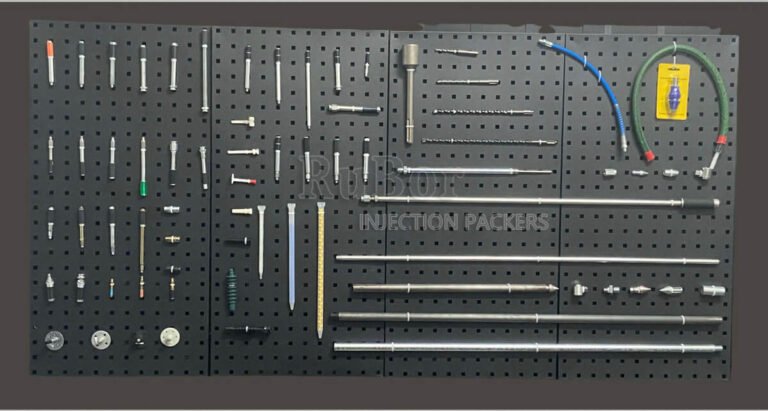
How to Choose Injection Packers
Introduction Injection packers should be selected based on crack width, injection pressure, material type (PU or epoxy), and application environment. Use Aluminum packers and steel