
Curtain Injection
Home » Application » Curtain Injection
Curtain Injection for External Waterproof Barrier Formation.
Stop Water Before It Reaches the Structure
What is Curtain Injection?
Curtain Injection is an advanced grouting method used to form a continuous external barrier(grout curtain) outside underground structures. It is specifically designed for area-wide water infiltration problems where leakage cannot be controlled through localized repair methods.
Unlike internal repair techniques, curtain injection creates a protective layer between the structure and surrounding ground, effectively isolating the structure from water sources.
This is a barrier-forming system, not a crack repair or surface sealing method.
What Makes Curtain Injection Different?
Compared to other injection methods, Curtain injection operates on a fundamentally different engineering principle.
Core Distinction
- It does not target individual cracks
- It does not focus on surface sealing
- It does not aim to strengthen soil mass globally
Instead, it creates a continuous, overlapping grout zone that functions as a subsurface waterproof membrane.
Engineering Perspective
- External barrier grouting system
- Positive-side waterproofing technique
- Interface treatment between the structure and the ground
This positioning makes it uniquely suitable for complex underground environments.
When should be make curtain injection
When we cannot use conventional methods, we cannot effectively control water ingress. We have to use the curtain injection.
Typical Conditions
- Leakage occurs across large areas rather than isolated points
- Water pathways are hidden or unpredictable
- Structures are below the groundwater level
- Exterior access is restricted or impossible
- Previous injection or sealing attempts have failed
These conditions indicate a system-level infiltration issue, not a localized defect.
Technical Principle of Curtain Injection
It works by forming a continuous impermeable zone through controlled grout overlap.
Key Mechanisms
1. Overlapping Injection Zones
Each injection point creates a diffusion zone. Proper spacing ensures these zones overlap, forming a continuous curtain.
2. External Barrier Formation
Grout is distributed behind or around the structure, creating a separation layer between water and concrete.
3. Flow Path Interruption
The curtain blocks interconnected voids and soil permeability paths, cutting off water migration routes
Applications of Curtain Injection
It is widely used in underground and infrastructure projects where area-wide protection is required.
Key Applications
- Basement and below-grade structures
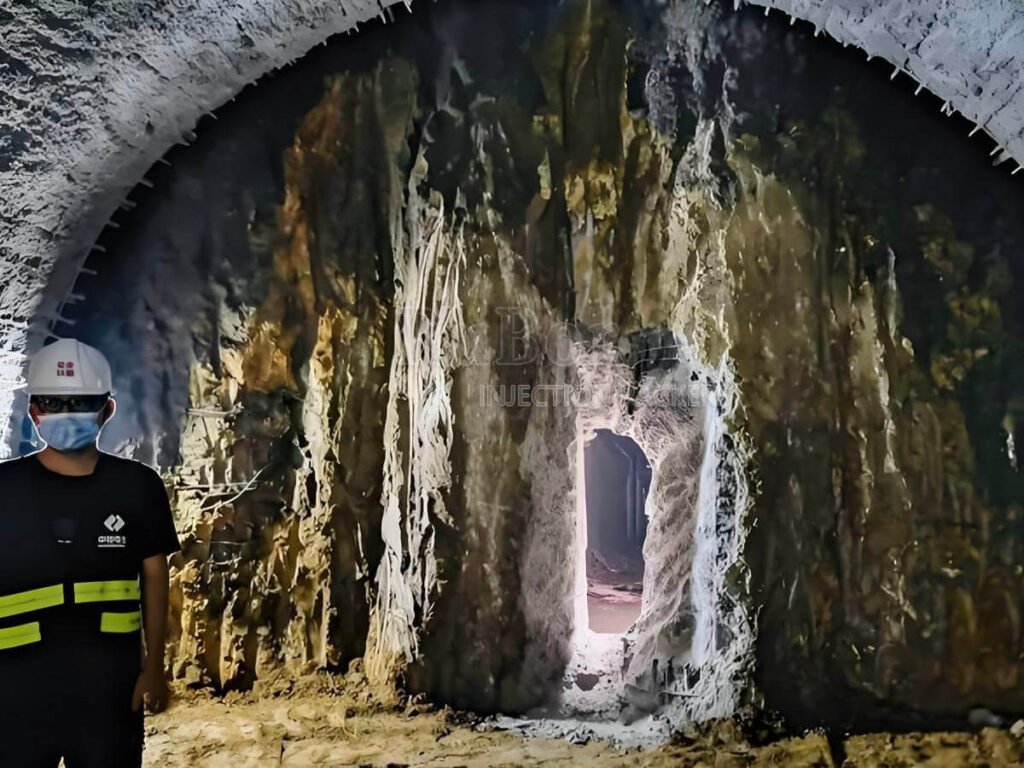
- Tunnel linings and metro systems
- Manholes and underground utilities
- Retaining walls and diaphragm walls
- Water-retaining structures
- Foundations exposed to groundwater pressure
Advantages of Curtain Injection
- Stops water at the source(positive-side control)
- Treats entire affected zones,not individual defects
- No need for excavation
- Effective in complex or hidden conditions
- Provides long-term barrier performance
What tools and materials use for Curtain Injection
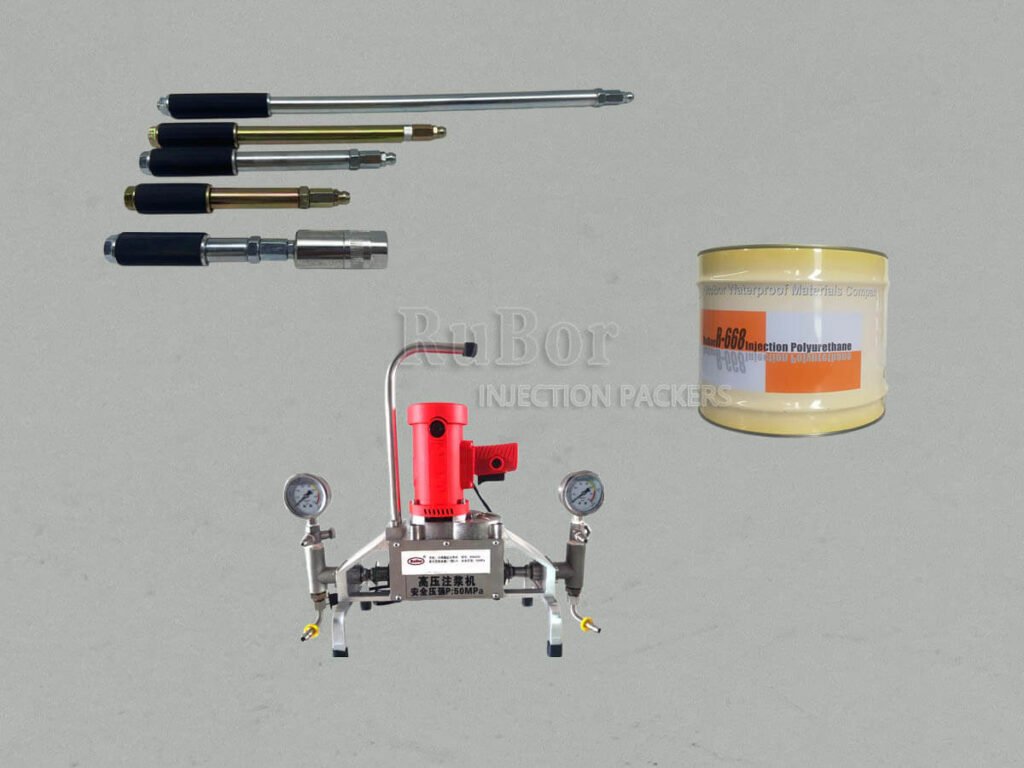
When you apply curtain injection, a complete system should be used. It includes the following tools and materials:
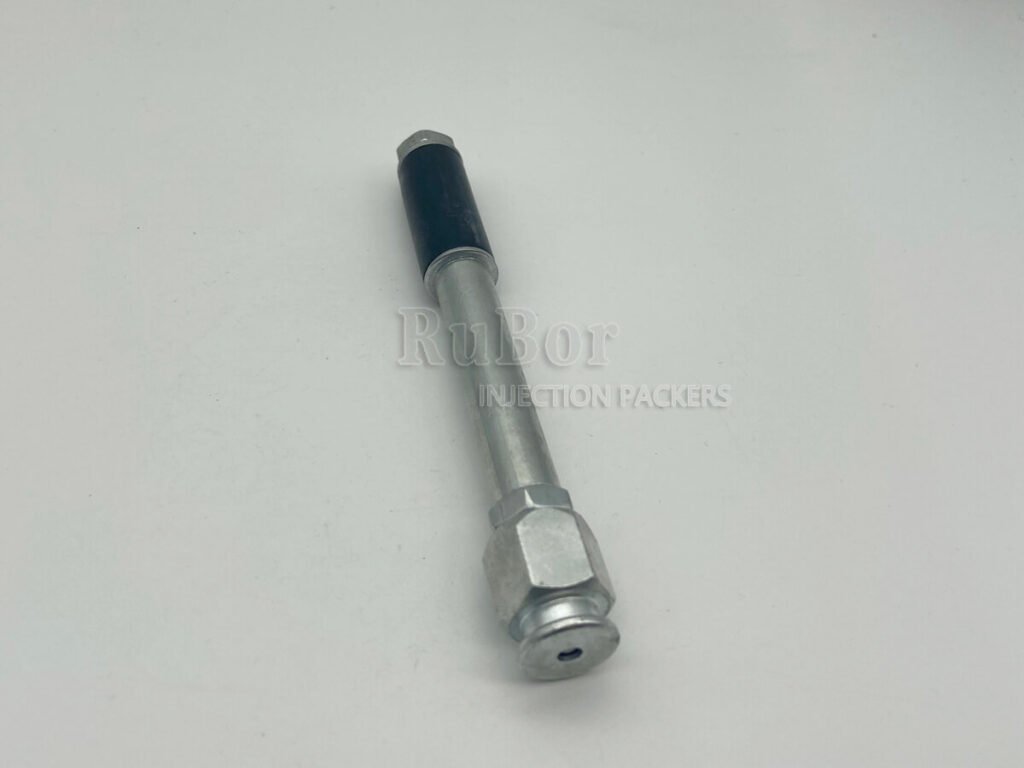
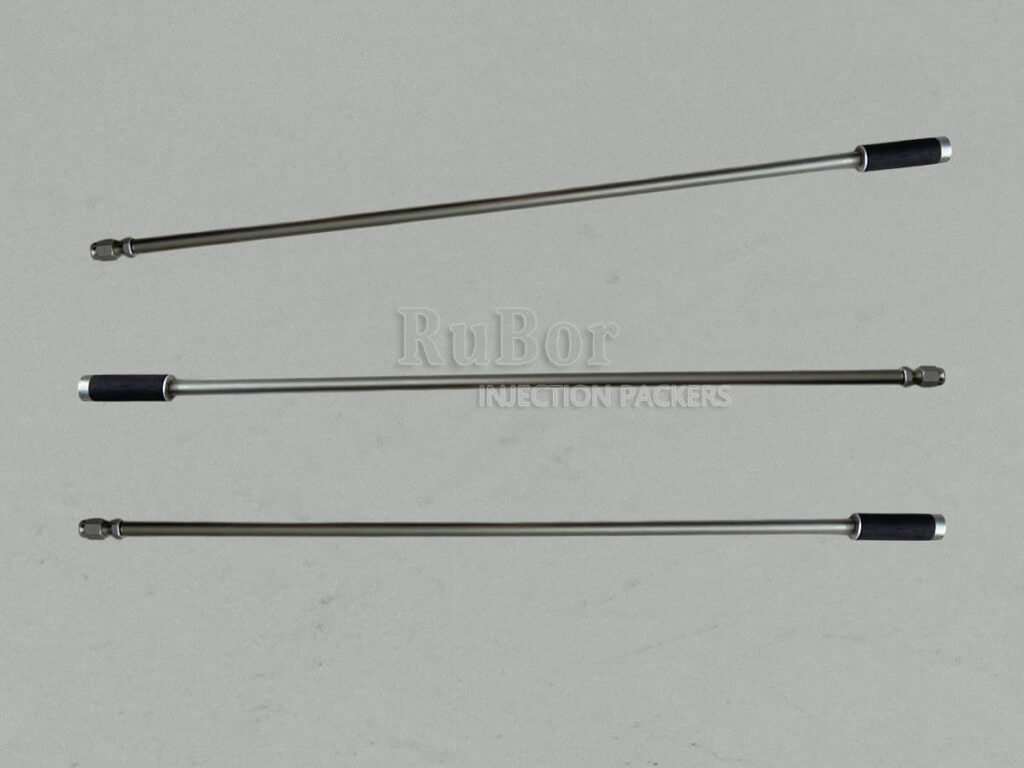
Injection Packers
Designed to withstand high pressure and ensure controlled delivery
Injection Pumps
Provide stable and adjustable pressure for consistent grout flow
Injection Materials
Selected based on permeability and site conditions
System integration is critical for achieving a continuous curtain.
Submit a Quick Quote
FAQS
We are happy to help you choose the best injection products for your projects.
Q.What is curtain injection used for?
It forms a continuous subsurface barrier to block groundwater infiltration and protect underground structures
Q. Can curtain injection stop all leaks?
When correctly designed and executed, it effectively prevents water ingress across multiple leak points。
Q.Is curtain injection permanent?
Yes, with proper materials and execution, it provides long‑lasting waterproofing performance.
Q. Is curtain injection suitable for all soil types?
Material and design must be adapted based on soil permeability and structure.
Related blog about Curtain Injection
Lorem Ipsum is simply dummy text of the printing and typesetting industry.

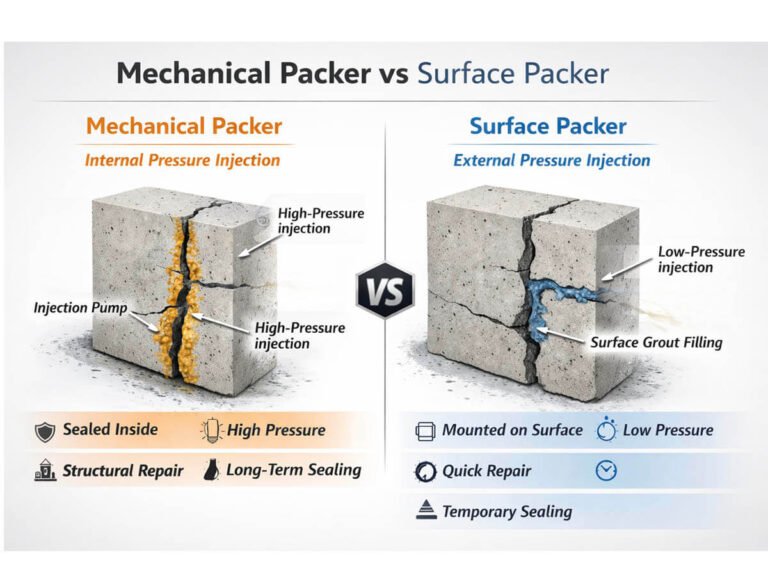
Mechanical vs Surface Injection Packers
Introduction Mechanical and surface injection packers differ in installation method, injection depth, and pressure delivery. Mechanical packers are installed into drilled holes, creating an internal
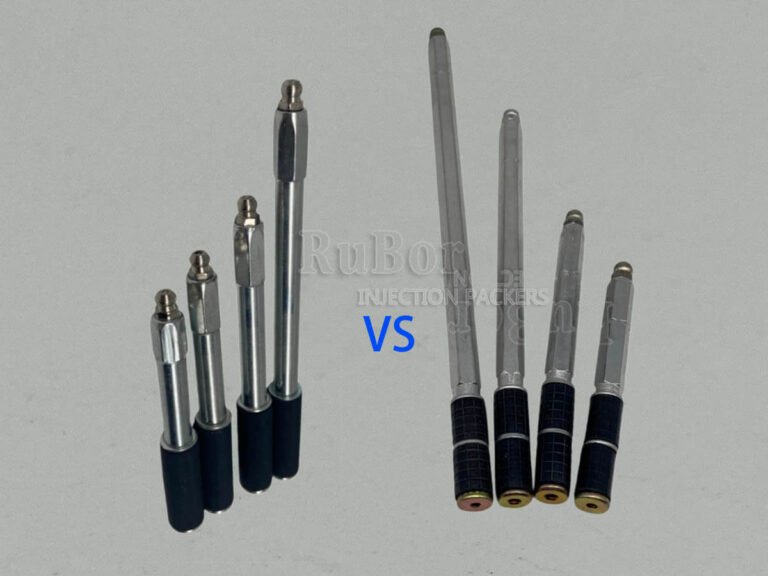
Steel vs Aluminum Injection Packers: Which One Is Better for Your Project?
Introduction Steel injection packers are best for high-pressure, structural, and reusable applications, while aluminum packers are ideal for medium-pressure waterproofing jobs where cost and corrosion
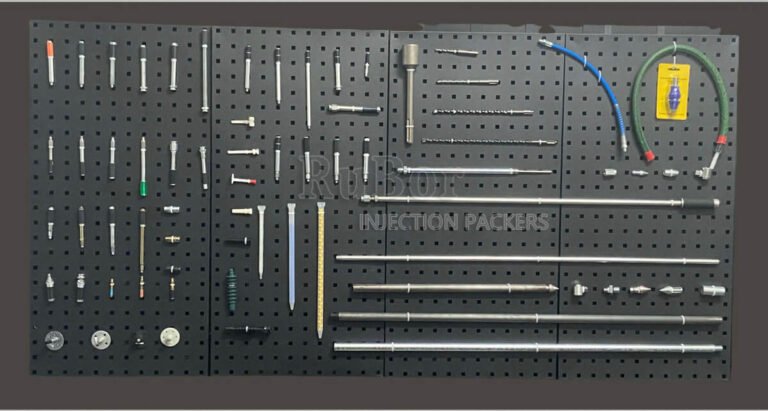
How to Choose Injection Packers
Introduction Injection packers should be selected based on crack width, injection pressure, material type (PU or epoxy), and application environment. Use Aluminum packers and steel