Leak Sealing
Home » Application » Leak Sealing
Leak Sealing Solutions for Concrete | Crack Injection&Waterproofing Systems
What is Leak Sealing?
Leak sealing is the process of stopping water ingress in concrete structures by sealing cracks, joints, or voids that allow water penetration.
Where Leakage Generally Happens:
- Structural cracks caused by stress or shrinkage
- Construction joints and cold joints
- Honeycombs or voids in concrete
- Pipe penetrations and weak points
Solutions for Concrete Structures
Water leakage in concrete structures is one of the most common and costly problems in construction and infrastructure maintenance. From basement seepage to tunnel leakage and structural cracks, uncontrolled water ingress can lead to corrosion, structural deterioration, and long-term damage.
Generally, we use injection grouting technology to seal leaks. Injection grouting technology is widely recognized as the most effective and reliable solution. By injecting specialized resins into cracks and voids under pressure, it is possible to stop active waters and restore structural integrity.
A complete sealing system typically includes:
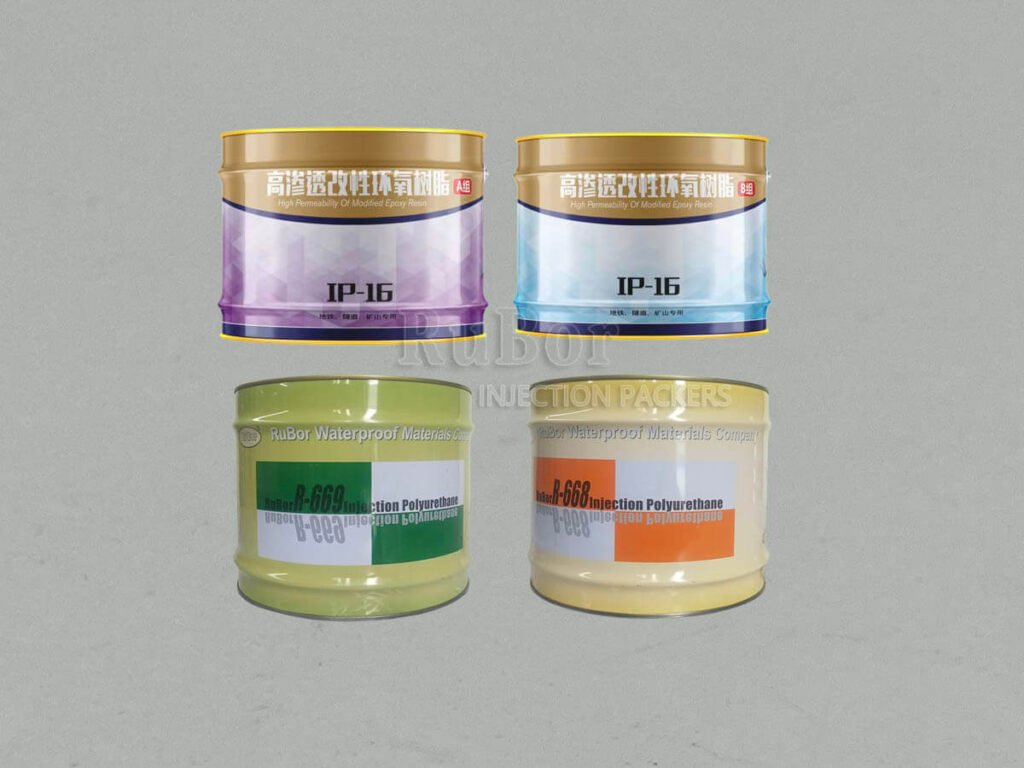
High-performance grouting materials (Polyurethane / Epoxy / Acrylate )
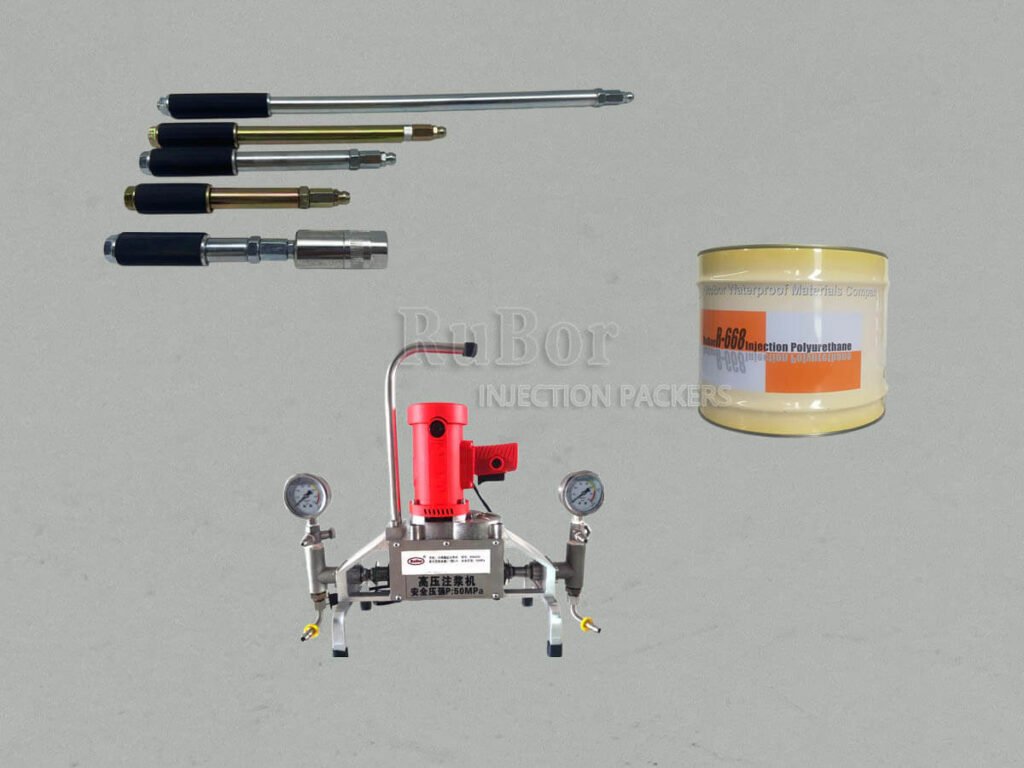
Injection equipment(injection pumps and accessories)
Precision injection tools, such as injection packers.
Leak Sealing vs Waterproofing:
Waterproofing: Prevents water from entering
Leak sealing: Stops existing active leaks
Leak sealing is especially critical in structures already exposed to groundwater or hydrostatic pressure.
Common Types of Leakage Problems
Leakage in concrete structures can occur in various forms, depending on factors such as construction quality, environmental conditions, and structural stress. Below are the most typical leakage scenarios encountered in construction and infrastructure projects:
| Leakage Type | Description |
|---|---|
| Crack Leakage | Water penetrates through structural or non-structural cracks in concrete. |
| Joint Leakage | Occurs at construction joints, expansion joints, or poorly bonded areas. |
| Basement Seepage | Continuous moisture or active water flow caused by groundwater pressure. |
| Tunnel & Underground Leakage | High-pressure water ingress in tunnels, metro systems, and underground structures. |
| Pipe Penetration Leakage | Water enters through gaps around embedded pipes or conduits. |
Leak Sealing Methods for Concrete Structures
Effective sealing depends on selecting the right method based on crack type, water pressure, and structural conditions. From active water leaks to dormant cracks, different sealing technologies are designed to deliver targeted and long-lasting waterproofing solutions. Below are the most widely used methods in construction and infrastructure repair.
Polyurethane Injection
Best for active water leakage
Expands upon contact with water
Forms flexible foam to stop flowing leaks
Epoxy Injection
Designed for structural crack repair
High bonding strength
Restores concrete integrity
Acrylic Gel Injection
Ultra-low viscosity for fine cracks
Flexible and durable sealing
Leak Sealing Materials
Different leakage conditions—such as active water flow, fine cracks, or structural damage—require different sealing materials with the right properties, including viscosity, flexibility, strength, and reaction behavior.
Polyurethane
Reacts with water and expands
Ideal for active leaks
Flexible and waterproof
Epoxy Resin
High-strength bonding
Used for structural cracks
Suitable for dry or damp conditions
Acrylic Gel
Ultra-low viscosity
Ideal for fine cracks and soil sealing
Material selection depends on leakage type,crack size,and water pressure.
Injection System for Leak Sealing
We should use injection system to deliver materials precisely into cracks and voids. Below are the essential equipment and tools used in the injection process:
Injection pumps(manual or electric)
Injection packers(for sealing and pressure delivery)
Grease couplers and connectors
These components work together to ensure precise and efficient resin injection.
Leak Sealing Applications Areas
There are always leaks in multiple industries. Below are the most common application areas:
- Basement waterproofing
- Concrete crack repair
- Tunnel and metro systems
- Elevator pits
- Retaining walls
- Water tanks and reservoirs
- Underground structures
How to Choose the Right Leak Sealing Solution
Selecting the correct solution depends on several factors:
| Selection Factor | Condition | Recommended Solution |
|---|---|---|
| Type of Leak | Active water leak | PU injection |
| Dry crack | Epoxy injection | |
| Crack Width | Fine cracks | Acrylic gel |
| Wide cracks | PU or epoxy injection | |
| Structural Requirements | Structural repair | Epoxy injection |
| Waterproofing | PU injection | |
| Pressure Conditions | High pressure | Steel packers + PU injection |
| Low pressure | Plastic packers |
Common Leak Sealing Problems & Solutions
Problem | Cause | Solution |
Leak not stopped | Wrong material | Use PU for active leaks |
Resin leaking out | Poor sealing | Improve packer installation |
Low injection efficiency | Insufficient pressure | Use proper injection pump |
Crack not fully filled | Incorrect spacing | Adjust drilling intervals |
Get Professional Leak Sealing Solutions
Are you looking for reliable leak solutions for your project? We provide a one-stop service for your projects. Please find below what we can supply.
High-quality grouting materials
Technical support and application guidance
👉Contact us today to get expert advice and product recommendations for your projects.
Submit a Quick Quote
FAQS
we are happy to help you choose the best leak sealing procuts for your projects.
Q. What is the best method for leak sealing?
Injection grouting with polyurethane or epoxy is the most effective method for long-term leak sealing.
Q. Can leak sealing stop active water flow?
Yes,PU injection reacts with water and expands,effectively stopping active leakage.
Q.Is leak sealing permanent?
When properly executed,injection grouting provides a long-lasting or permanent solution.
Q. What is the difference between PU and epoxy?
PU is flexible and used for waterproofing,while epoxy is rigid and used for structural repair.
Related blog about leak sealing
Lorem Ipsum is simply dummy text of the printing and typesetting industry.

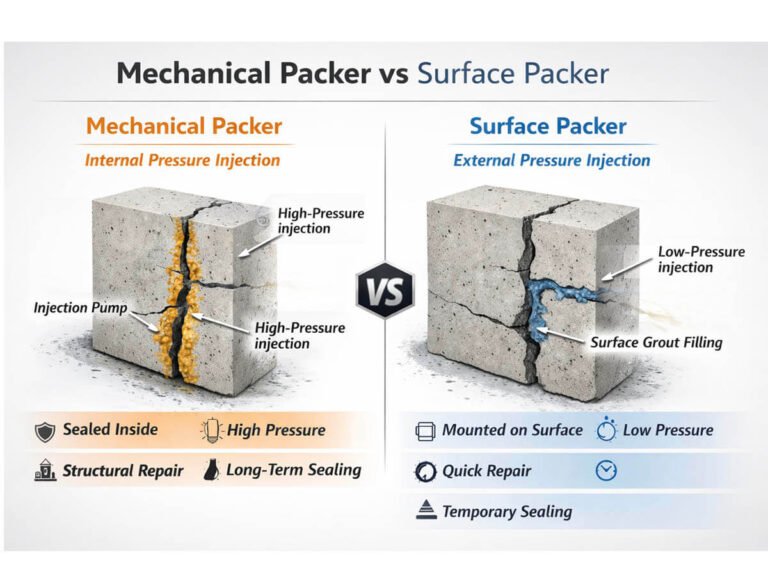
Mechanical vs Surface Injection Packers
Introduction Mechanical and surface injection packers differ in installation method, injection depth, and pressure delivery. Mechanical packers are installed into drilled holes, creating an internal
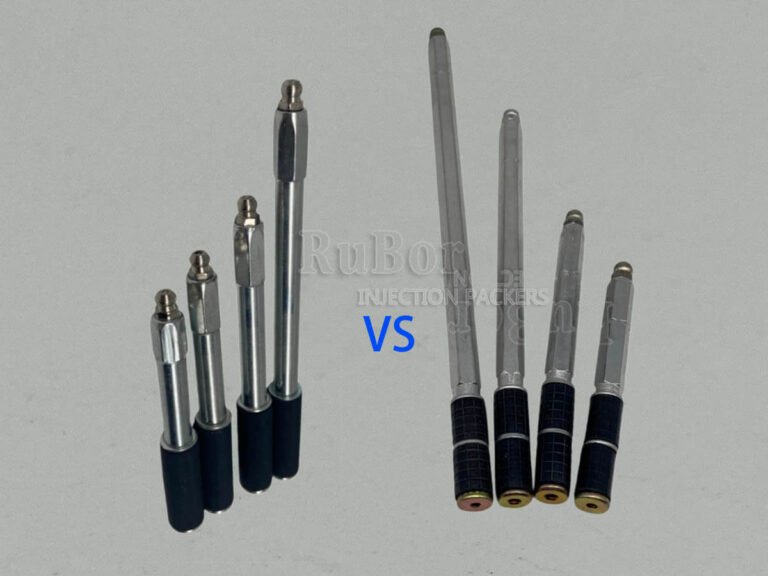
Steel vs Aluminum Injection Packers: Which One Is Better for Your Project?
Introduction Steel injection packers are best for high-pressure, structural, and reusable applications, while aluminum packers are ideal for medium-pressure waterproofing jobs where cost and corrosion
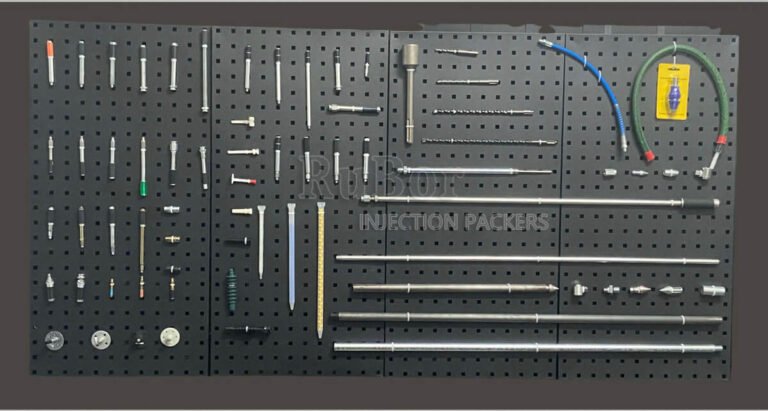
How to Choose Injection Packers
Introduction Injection packers should be selected based on crack width, injection pressure, material type (PU or epoxy), and application environment. Use Aluminum packers and steel